
Mon–Sun: 7 AM–11 PM(214) 286-6733
Balch Springs ConcreteBalch Springs Concrete

Concrete sidewalk building in Balch Springs TX - a walk with grip on rainy days

Cracked or heaved walk to your door? We plan the route around trees and the ground under it, then pour a level walk with grip.

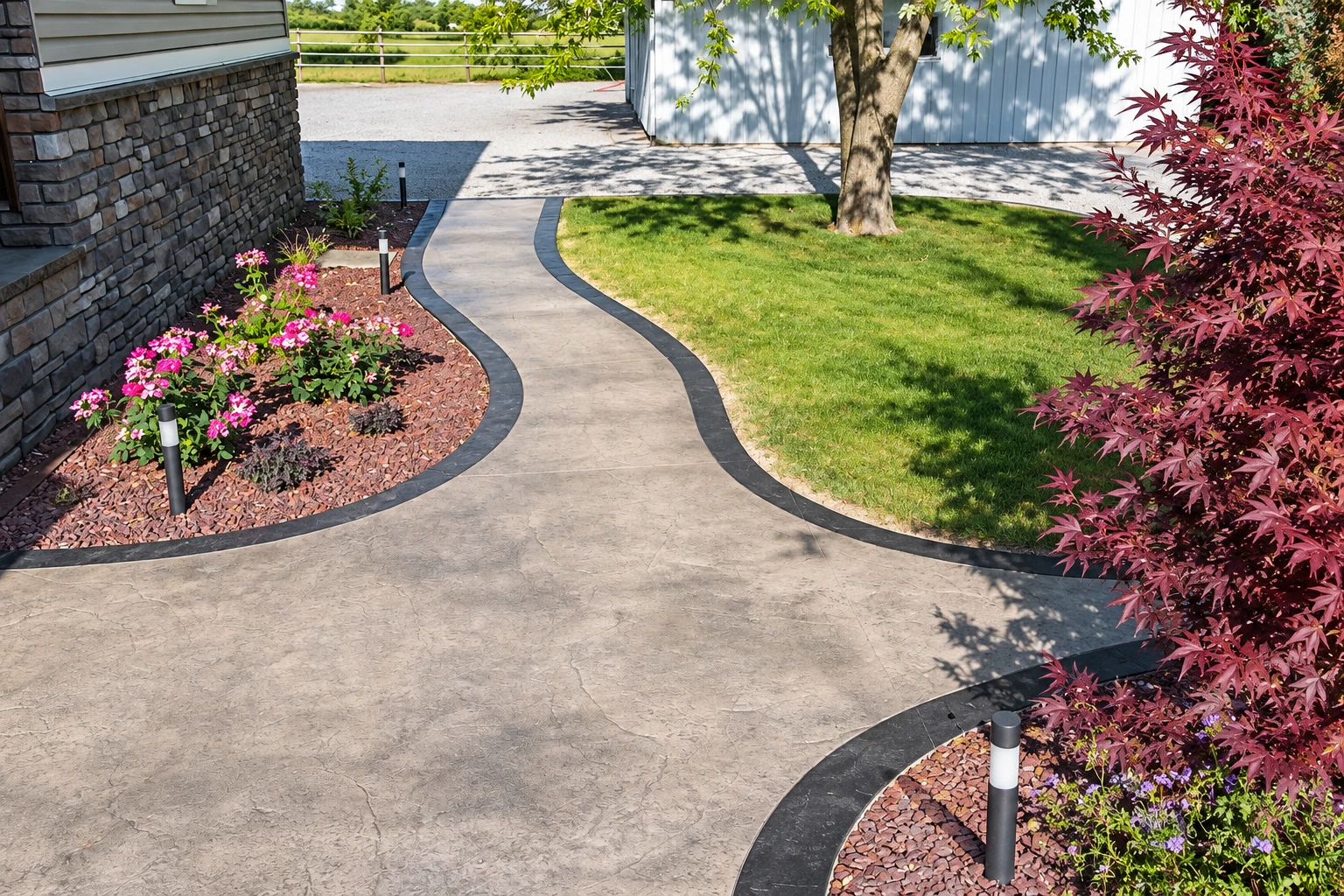
Curving concrete sidewalk with dark borders winds between flower beds, lawn, and a stone-faced building.

How is a new concrete sidewalk built in Balch Springs?

At Balch Springs Concrete, building a concrete sidewalk in Balch Springs means we set forms and rebar, the steel bars that help hold the slab together, along the route you pick, then pour a new walk across your property that sits level and gives your feet grip when it's wet.

Most calls start with a walk that's cracked, pushed up by a root or sunk in spots so water pools and somebody trips. On a sidewalk, how it holds up comes down to the route it takes and the ground it sits on, so that's where I spend most of my time when I look at your job. We're based in Balch Springs and work across the cities around it, including Mesquite, Garland, Forney and Lancaster.

The price moves with the length and width of the walk, how much old concrete has to come out, how much digging the ground needs and whether trucks will cross it. The schedule turns mostly on the weather on pour day, the cure before anyone walks on it and the city's inspection if the job needs a permit, and I'd rather check with the city than guess about that. When I measure your walk, I write down what the price covers so you see your own number.

What happens when you call about a new sidewalk in Balch Springs?

Here's how it goes from your first call to the day we pour, and who you'll be dealing with at each step.

I come out and walk the route with you

After you call or send a message, I come out myself to measure and look the route over with you, including the trees along it and where the water runs. I learned concrete working next to my dad, and I've run this business in Balch Springs since 2023.

A written estimate with nothing left to guess

You get the price in writing, with the size, the base work and the finish spelled out. If there's something I can't know until the old walk comes up, I'll put that on the estimate instead of guessing and having you find out later.

Licensed and insured, with me on site

We're licensed and insured. Once you say yes, we file the permit if your walk needs one and set the pour date around the inspection, and I'm on the job with our crew from the forms through the pour and the cleanup.

What our concrete sidewalk building covers

On a walk, where it runs and what's under it matter more than extra strength, so we look at the trees and the ground along the route before we set a single form. Then we take out the old walk, dig down and pack the subgrade, the dirt the slab sits on, and set the forms with rebar inside. After the pour we cut control joints, shallow grooves that give the concrete a place to crack where we chose instead of wherever it likes, and give it a broom finish, a light brushed texture, because a walk troweled too smooth gets slick in the rain. Then it cures, which is the wait while the concrete hardens and gains strength before it takes traffic.

A new walk often ties into other work around the house. If your walk runs to a garage that needs new concrete, our garage floor concrete work can be planned with it so the levels meet, and if you'd like the walk colored or patterned to match a patio, we handle that through our decorative concrete service with a texture that still grips.

  • Taking out and hauling off the old walk, if there is one
  • Digging out and packing the subgrade along the whole route
  • Forms set level and square, with a fall that carries rain away from the house
  • Rebar set inside the forms and control joints cut along the walk
  • A broom finish for grip, then a protected cure before anyone uses it

Our sidewalk process, one step at a time

Most sidewalk problems start with something nobody sees after the pour, so these four steps are where we put our care.

  1. Mark the route and watch the water

    We stake out where the walk will run and check which way water moves across the yard, because a walk that tips toward the house sends rain right at your foundation. If a tree's roots are in the way, I'll talk with you about shifting the line before we dig.

  2. Dig out and pack the base

    We dig past the loose topsoil and pack the base firm instead of raking it level, because raked dirt settles and the walk settles with it. It's the part you won't see on day one, so it's the first thing people want to cut, and I'd rather trim the finish than skimp on the base.

  3. Pour early and cut joints on time

    We book the truck for the cooler part of the day, since a pour in midday heat can leave a weak, dusty top later on. Control joints go in while the concrete is still fresh, because joints cut late or skipped leave cracks in places nobody picked.

  4. Cure, clean up and hand it over

    We keep the new walk protected while it cures and haul off the forms and leftover material. Before we leave, I walk it with you and tell you when it's ready to use.

Get a written price for your new sidewalk

Send us the route you have in mind, a rough length and width, and whether delivery trucks will cross the walk, or call (214) 286-6733. We reply within one business day to set a time, and I come out to measure and write up a free estimate on site. There's no obligation to go ahead.

(214) 286-6733

Questions about sidewalks in Balch Springs

How much does a concrete sidewalk cost in the Dallas area?

A concrete sidewalk around Dallas usually costs about $5 to $12 per square foot with materials and labor, and that's the going rate in the area, not our quote. A straight run on firm ground usually sits toward the low end, while tear-out, extra base work or a thicker section push it up. I measure your walk and write down what the price covers, and on every job it's your satisfaction, guaranteed.

How thick should a concrete sidewalk be?

A concrete industry guide written for Michigan recommends at least 4 inches, and at least 5 inches where delivery vehicles will cross the walk. If trucks pull across yours to reach the house or garage, tell me at the estimate so the plan accounts for it.

How long before I can walk on a new concrete sidewalk?

The same Michigan guide says a new sidewalk may be opened to traffic after 7 days of curing, or sooner if testing confirms it has reached its strength. Plan on keeping people, bikes and the mower off it until then, and I'll tell you what I see when we hand it over.

Is it okay to pour a concrete sidewalk on a hot, windy day?

It can be, but wind and sun are as hard on fresh concrete as heat, and the industry's hot-weather guidance treats a windy, sunny day as needing stricter precautions than a calm, humid one at the same temperature. That's part of why we pour in the cooler hours. One concrete products maker also warns that adding water to cool the mix or make it easier to work can hurt its strength and how long it lasts, so it's a fair thing to ask any crew about.

What does Balch Springs check before a sidewalk is poured?

On a permitted job, the city wants the address and the permit posted on site and the steel and forms inspected before any concrete goes in. The city also issues right-of-way permits, and for now it's taking those applications on paper because of technical trouble with its online system, which you can check on the city's permits and inspections page. Under a permit, all building materials have to be hauled off when the work is done, and that paperwork is part of what we handle.

Building walks on Balch Springs clay

Our area sits in the Blackland Prairie, a band of ground that runs from north of Dallas down to San Antonio, and its Houston Black soils carry clays that shrink and swell a lot as they dry out and get wet again. Not every yard sits on the worst of it, but where one does, that movement lifts and drops a walk over the years.

Tree roots do the same kind of damage from below, which is why I look so hard at the route during the estimate. We meet the same clay and the same root trouble across the cities around us, and we plan walks there the same way.

Show us where your new walk goes

The sooner I see the route, the sooner I can tell you whether a tree or a low spot changes the plan, so call (214) 286-6733 or send us a note through the form.

If you're still deciding where the walk should run, call or send a message and we'll talk it through.

Tell us about your project
(214) 286-6733Get an estimate